
Confronting the Flawed Story Behind the First SCOTUS Second Amendment Case (Ft. Brian Frye)
This week, we're looking back at the Supreme Court case that established the "common use" standard likely to play a major role in its new AR-15 case.
That case is 1939's US v. Miller, and we have a guest with brand-new information that unsettles the official story of its namesake. Tulane law professor Brian Frye wrote the definitive account of Miller back in 2008, which ended up heavily influencing the Supreme Court's opinion in 2009's DC v. Heller. But, nearly 20 years later, he says the police and newspaper accounts about Jack Miller's life are now in dispute.
Frye recounts the original narrative of the case, which reads like something out of a gangster movie. Miller was accused of being involved in multiple bank robberies, including a simultaneous heist at two Oklahoma banks. He then turned state's evidence and was later murdered by aggrieved gangsters.
In between that time, he was arrested under the National Firearms Act (NFA) for transporting an unregistered sawed-off shotgun across state lines. An enterprising judge, who'd backed federal gun control as a congressman, then decided to use his prosecution as a test case for the NFA's constitutionality. In a truncated Supreme Court case that saw no oral arguments, that setup paid off with the High Court, in a fairly narrow ruling, determining that short-barreled shotguns aren't protected by the Second Amendment (or, at least, it didn't have evidence to say they are).
It did, however, mention that the Second Amendment would protect guns that are in "common use." And that standard was something the 2009 Court grabbed onto in DC v. Heller, which is likely to play a substantial role in the 2026 Court's forthcoming AR-15 case.
But the current understanding of Miller is deeply flawed, according to Frye. After his 2008 paper on the case garnered widespread attention, Frye said he heard from Jack Miller's surviving family members. And they had a very different version of what happened.
Instead of being a committed career criminal, Miller's great-granddaughter said he was a persecuted minority living in the shadow of the infamous Tulsa Massacre, who was forced into at least some of the crimes he was involved with. He said he's currently working on a new paper that details the family's claims alongside other evidence, revealing a clearer picture of the story behind the Supreme Court case.
Frye said that the local police singled out Miller for his Cherokee background and that they were involved in the bank robberies. He said corrupt police may even have been involved in his arrest for violating the NFA and in his eventual murder.
He acknowledged that the family, like the police and papers from the period, has motivation to tell Miller's story a certain way. But he said he believed Miller's great-granddaughter is credible. Still, he noted they are still working on a final draft of the paper.
 Stephen Gutowski
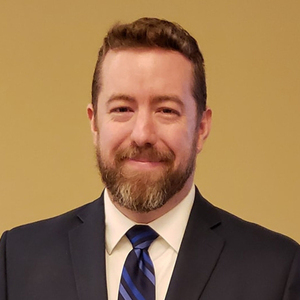
 Brian Frye